
 20. März 2026
- 6 Min. Lesezeit
Produktionsreife KI-Agenten: Orchestrierung, Guardrails und messbare Ergebnisse
Über mehrere Jahre hinweg wurden KI-Agenten primär als Produktivitätswerkzeuge positioniert: kleine, aufgabenbezogene Automatisierungen zur Beantwortung von Fragen, Zusammenfassung von Dokumenten oder Ausführung einfacher Workflows. Im Jahr 2026 hat sich diese Perspektive grundlegend gewandelt. KI-Agenten sind nicht mehr bloße Werkzeuge – sie werden zu operativen Akteuren innerhalb digitaler Systeme.
 von Digizal Editorial
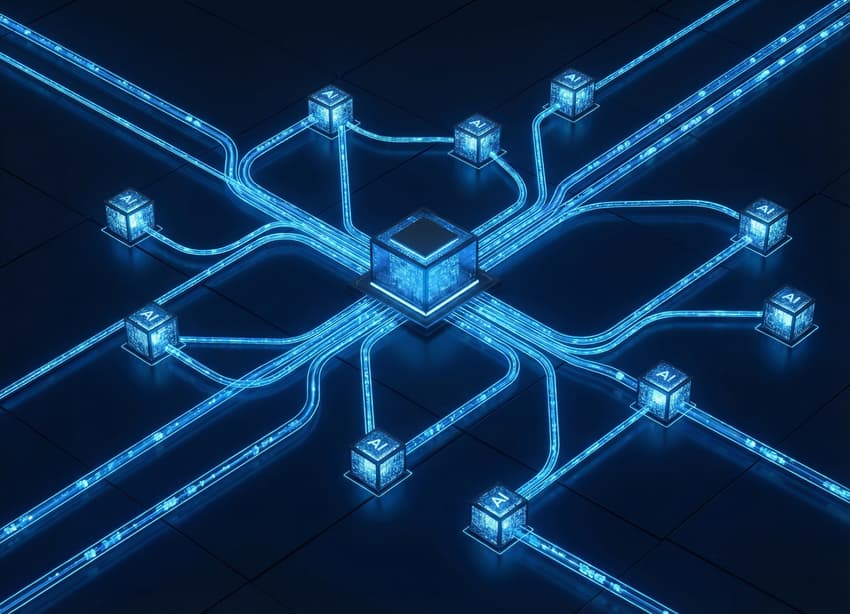
Der Diskurs hat sich von isolierten "KI-Agenten" hin zu sogenannten Agentic Environments verlagert: vernetzten Systemen, in denen autonome Agenten innerhalb strukturierter digitaler Infrastrukturen agieren – gesteuert durch Daten, Richtlinien und Orchestrierungsebenen.
Dieser Wandel stellt nicht nur eine technologische Weiterentwicklung dar, sondern eine fundamentale architektonische Neuausrichtung.

Von isolierten Agenten zu Systemakteuren
Frühe KI-Agenten waren im Wesentlichen Wrapper um Large Language Models. Sie stützten sich auf Prompt Engineering, externe Schnittstellen und fragile Integrationen. Ihre Fähigkeiten waren beeindruckend, ihre operative Zuverlässigkeit jedoch begrenzt.
Moderne Agentensysteme agieren heute als integraler Bestandteil kohärenter digitaler Umgebungen:

- Sie greifen auf strukturierte Datenebenen zu, nicht nur auf unstrukturierten Text
- Sie integrieren sich in operative Plattformen (ERP-, CRM-, BI- und DevOps-Systeme)
- Sie agieren innerhalb definierter Governance- und Compliance-Rahmenwerke
- Sie werden zentral orchestriert, statt individuell geskriptet zu werden
- Sie interagieren mit anderen Agenten als Teil verteilter Systeme
Im Jahr 2026 werden funktionale KI-Agenten nicht mehr über ihre Dialogfähigkeit definiert, sondern über ihren Reifegrad in der Systemintegration.
Ein Agent, der nicht auf Echtzeitdaten zugreifen, validierte Workflows auslösen, mit operativen Systemen interagieren und Governance-Vorgaben einhalten kann, ist kein produktionsreifes System, sondern ein Prototyp.
Was ist eine Agentic-Umgebung?
Eine Agentic-Umgebung ist keine bloße Ansammlung von KI-Bots. Es handelt sich um ein digitales Ökosystem, in dem Agenten als vollwertige Systemkomponenten fungieren.
Sie umfasst fünf zentrale Ebenen:
1. Datenebene
Strukturierte, verwaltete Echtzeit-Datenpipelines: operative Datenbanken, Analytics-Plattformen, Telemetriesysteme, Event Streams und Business-Intelligence-Ebenen. Ohne dieses Fundament halluzinieren Modelle – mit ihm treffen sie fundierte Schlussfolgerungen.
2. Intelligenzebene
LLMs agieren nicht mehr isoliert. Sie sind eingebettet in Retrieval-Augmented Generation (RAG), Vektordatenbanken, domänenspezifische Knowledge Graphs und Decision-Intelligence-Frameworks. Intelligenz bedeutet hier kontextbezogene Entscheidungsfindung über strukturierten Systemen.
3. Orchestrierungsebene
Agenten erfordern präzise Koordination: Aufgaben-Routing, Abhängigkeitsauflösung, Workflow-Orchestrierung, Multi-Agenten-Kollaboration, Fehlerbehandlung und Eskalationslogik. Diese Ebene macht Agenten zu verlässlichen Systemteilnehmern.
4. Integrationsebene
Produktionsreife Agentensysteme verbinden sich mit Kollaborationstools, ERP-Systemen, Cloud-Infrastrukturen und Sicherheitsplattformen. Agenten müssen innerhalb bestehender Unternehmensarchitekturen agieren, nicht isoliert daneben.
5. Governance-Ebene
Zuverlässige Agentic Environments beinhalten Richtlinienkontrollen, Zugriffsmanagement, Audit-Logging, Nachvollziehbarkeit und Compliance-Durchsetzung. Ohne Governance wird Autonomie zum unternehmerischen Risiko.
Warum die meisten KI-Agenten in der Produktion scheitern
Die meisten Bereitstellungen von KI-Agenten scheitern nicht an der Qualität des Basismodells, sondern an architektonischer Unreife.
- Fehlende Integration in operative Datenquellen
- Kein Zugriff auf operativen Systemkontext
- Unzureichende Orchestrierungslogik
- Fehlendes Governance- und Sicherheitsframework
- Undefinierte Systemgrenzen und Zugriffsbeschränkungen
- Fehlende Vertrauens- und Verifikationsarchitektur
- Mangelndes Lebenszyklus- und Performance-Management
Ohne diese Fundamente bleiben Agenten isolierte Demos statt produktiver Systeme.
Produktionsreife Agenten verhalten sich eher wie Microservices als wie Chatbots: Sie verfügen über definierte Eingaben, Ausgaben, Berechtigungen, Zuständigkeiten, Fehlerzustände und klare Eskalationspfade.
Der Aufstieg von Agentic Operations
Im Jahr 2026 führen Organisationen Agenten nicht mehr allein für punktuelle Produktivitätsgewinne ein. Sie nutzen sie für: operative Koordination, Systemüberwachung, Datenanalyse, Workflow-Governance, Entscheidungsunterstützung, Infrastrukturoptimierung und Compliance-Automatisierung.
Dies markiert die Entstehung von Agentic Operations: Umgebungen, in denen KI-Systeme zu einem integralen Bestandteil der organisatorischen Infrastruktur werden.
Von Automatisierung zu Intelligenzinfrastruktur
Der strategische Unterschied ist eindeutig: Automatisierung führt deterministische Aufgaben aus. Intelligenzinfrastruktur unterstützt komplexe Entscheidungen.
Agentic Environments zielen nicht darauf ab, menschliche Expertise zu ersetzen, sondern die organisationale Entscheidungsfähigkeit zu stärken: durch schnellere Reaktionszyklen, höhere Informationstransparenz, geringere Systemreibung und adaptive Workflows.
Entwicklung von Agentic-Systemen im Jahr 2026
Moderne Agentensysteme folgen einer Plattformlogik statt einer isolierten Tool-Logik: modulare Intelligenzebenen, skalierbare Orchestrierung, standardisierte Schnittstellen und Governance-First-Prinzipien.
Agenten werden nicht nachträglich an Systeme angehängt – sie werden von Beginn an in die Systemarchitektur integriert.
Fazit
Erfolgreiche KI-Agenten entstehen nicht durch Prompt Engineering allein. Sie erfordern eine tragfähige Plattformarchitektur, Systemintegration, Data Governance, Orchestrierungslogik und robuste Intelligenzinfrastruktur.
Agentic Environments bilden die nächste Phase digitaler Unternehmenssysteme: Intelligenz wird Teil des operativen Gefüges, nicht nur ein aufgesetztes Feature.
Im Jahr 2026 geht es nicht mehr um das bloße Experimentieren mit KI – sondern um das Design von Systemen, in denen Intelligenz sicher und wertschöpfend arbeitet.