

 11. März 2026
- 5 Min. Lesezeit
Moderne Datenplattformen: Lineage, Datenqualität und Self-Service ohne Chaos
Analytics- und KI-Initiativen skalieren nur dann nachhaltig, wenn Datenpipelines, Datenverträge und Verantwortlichkeiten klar definiert sind. In Unternehmensumgebungen führt die schnelle Einführung von Machine-Learning-Modellen und Dashboards häufig dazu, dass strukturelle Lücken bei Datenkonsistenz, Governance und Datenqualität sichtbar werden.
 von Elena Marin, Solutions Architect
Erfolgreiche Datenarchitekturen zeichnen sich nicht durch die schiere Menge gesammelter Daten aus, sondern durch deren Zuverlässigkeit, Nachvollziehbarkeit und zielgerichtete Verfügbarkeit für geschäftskritische Entscheidungen.
Wie moderne Unternehmen solide Datenfundamente etablieren, bevor sie Modelle und Analytics-Tools unternehmensweit ausrollen.


Die Illusion der reinen Datenfülle
Viele Organisationen verfügen über Terabytes an Daten, die über Data Lakes, Cloud-Speicher und Altsysteme verteilt sind. Dennoch scheitern Vorhaben, daraus verlässliche Erkenntnisse zu gewinnen, oft an unklaren Schemata, ungetesteten Transformationen und fehlenden Dokumentationen.
Ohne standardisierte Datenqualitätsprüfungen und klare Lineage-Verfolgung werden Datenpipelines anfällig für schleichende Fehler, die das Vertrauen in Reports und KI-Ergebnisse untergraben.
- Data Contracts: Formale Vereinbarungen zwischen Datenproduzenten und -konsumenten
- Automatisierte Lineage: Lückenlose Nachverfolgung vom Ursprung bis zur Kennzahl
- Kontinuierliche Qualitätsprüfungen: Automatisierte Tests auf Vollständigkeit und Konsistenz
- Klare Data Ownership: Fachbereichsbezogene Verantwortung für bereitgestellte Datenprodukte
- Semantische Schicht: Einheitliche Begriffsdefinitionen über alle Abteilungen hinweg
Moderne Datenplattformen behandeln Daten als Produkt mit klaren Qualitätskriterien, Service-Level-Agreements (SLAs) und dedizierten Eigentümern.
Dies verhindert, dass Datensilos entstehen und Teams gegensätzliche Kennzahlen aus denselben Rohdaten ableiten.
Das Self-Service-Paradoxon lösen
Self-Service-Analytics war eines der zentralen Versprechen der letzten Jahre. In der Praxis führte ungesteuerter Self-Service jedoch oft zu unübersichtlichen Dashboard-Landschaften und uneinheitlicher Geschäftslogik.
Eine kuratierte semantische Schicht und standardisierte Kennzahlendefinitionen ermöglichen es Fachbereichen, autonom Analysen durchzuführen, ohne die Governance und Vergleichbarkeit zu gefährden.
Standardisierte Datenmodelle
Zentrale Definitionen für Kernentitäten (Kunden, Bestellungen, Transaktionen), die als verlässliche Basis für alle Reports dienen.
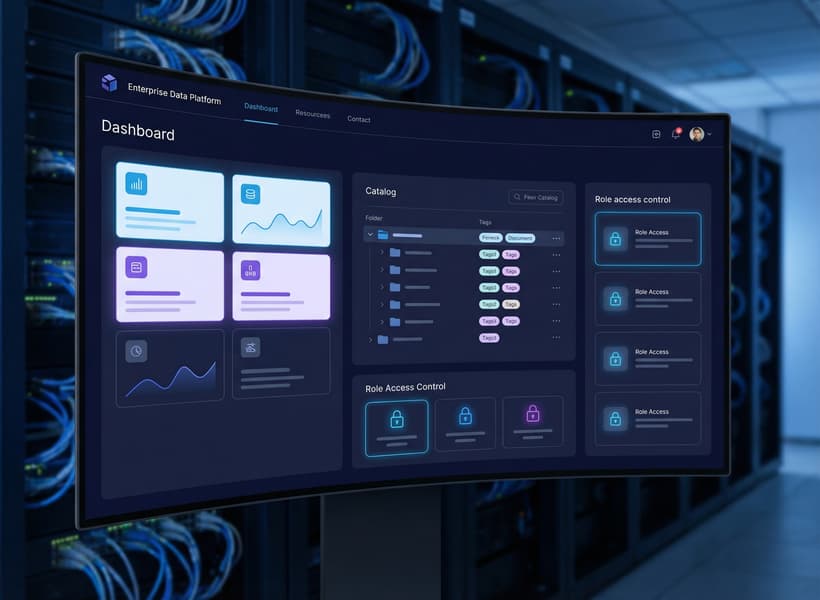
Automatisierte Metadatenverwaltung
Katalogisierung und Tagging von Datenbeständen zur einfachen Auffindbarkeit und Einhaltung von Sicherheitsrichtlinien.
Rollenbasierte Zugriffssteuerung
Präzise Autorisierungskonzepte, die den Zugriff auf sensible Informationen nach dem Least-Privilege-Prinzip regeln.
Integration in operative Prozesse und KI-Workflows
Datenplattformen dürfen keine isolierten Analyse-Silos bleiben. Sie müssen operative Systeme und KI-Agenten in Echtzeit mit verlässlichen Kontextdaten versorgen.
Durch eventgesteuerte Pipelines und strukturierte API-Zugriffe werden Daten zu einem aktiven Treiber operativer Workflows.
Fazit
Solide Datenfundamente sind die Voraussetzung für erfolgreiche Digitalisierungs- und KI-Strategien.
Unternehmen, die frühzeitig in Datenqualität, Lineage und Governance investieren, schaffen die Basis für skalierbare Innovation und belastbare Entscheidungen.