
 15. Januar 2026
- 6 Min. Lesezeit
Systemintegration: Event-Driven Patterns für operative Workflows
Fragmentierte Unternehmensanwendungen führen zu operativen Silos, manuellen Abstimmungsaufwänden und Dateninkonsistenzen. Durch den Einsatz von Event-Driven Architecture und asynchronen Messaging-Patterns können Organisationen zuverlässige, skalierbare und revisionssichere End-to-End-Workflows orchestrieren.
 von Marcus Webb, Integration Lead
Wie moderne Integrationstechnologien Back-Office-Prozesse und digitale Kundenerlebnisse nahtlos und fehlerresistent miteinander verbinden.
Architekturmuster für Entkopplung, Idempotenz, Transaktionssicherheit und unternehmensweites Monitoring.
Die Grenzen traditioneller Punkt-zu-Punkt-Schnittstellen
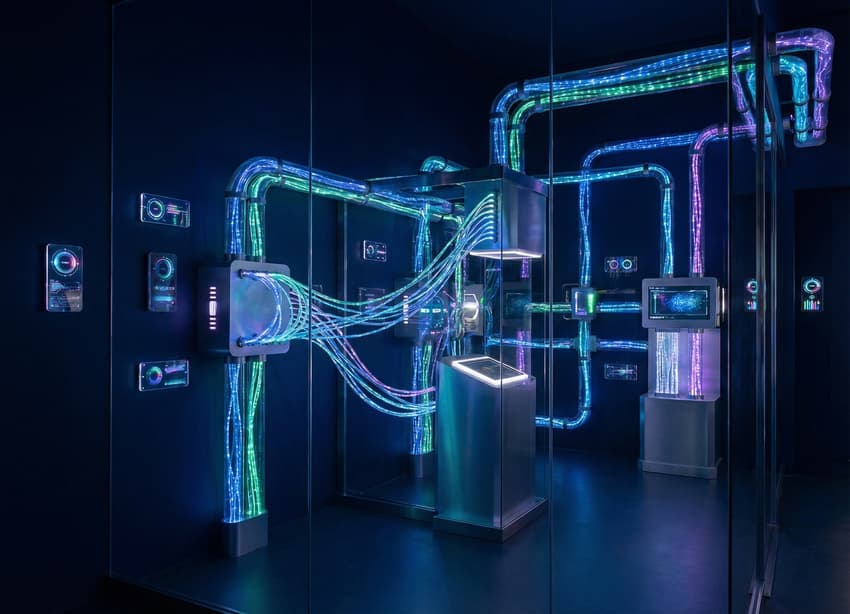
Direkte, synchrone HTTP-Aufrufe zwischen Systemen erzeugen enge Kopplungen und kaskadierende Ausfälle. Fällt ein Teilsystem aus, stockt der gesamte Geschäftsprozess.
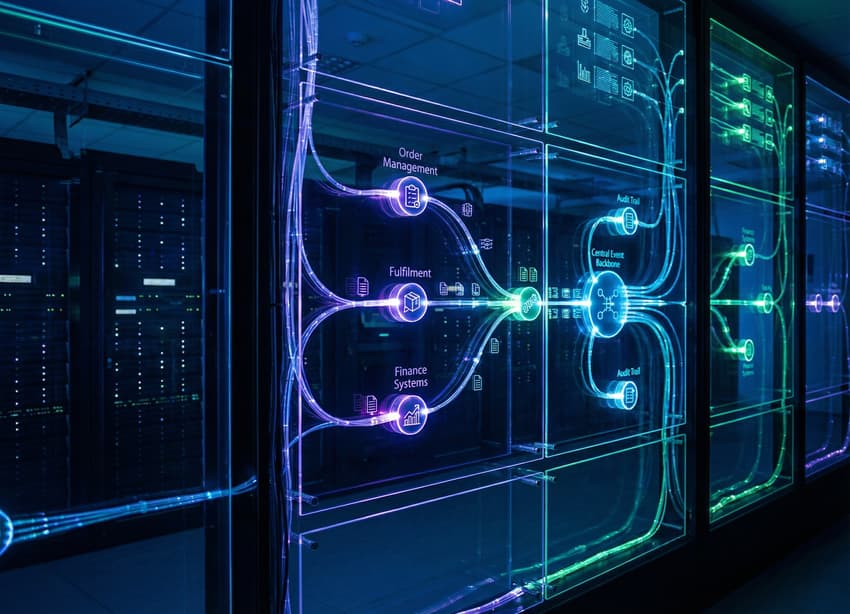
Asynchrone Event-Streams entkoppeln Systeme zeitlich und räumlich. Nachrichten werden sicher zwischengespeichert und zuverlässig abgearbeitet.
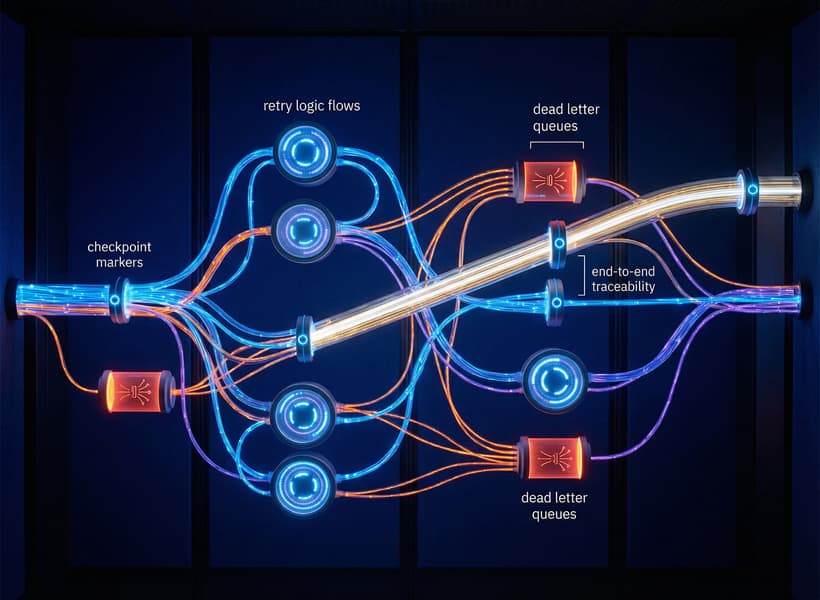
- Event-Driven Architecture: Asynchrone Entkopplung von Datenproduzenten und -konsumenten
- Idempotenz: Schutz vor Mehrfachverarbeitung bei wiederholten Nachrichtenübertragungen
- Transactional Outbox Pattern: Garantierte Konsistenz zwischen Datenbankzustand und Event-Publishing
- Dead Letter Queues: Isolierung fehlerhafter Datensätze ohne Blockade des Gesamtsystems
- End-to-End Tracing: Transparente Nachverfolgung verteilter Transaktionen in Echtzeit
Diese Muster stellen sicher, dass operative Prozesse auch bei Lastspitzen oder temporären Ausfällen einzelner Systeme stabil und nachvollziehbar bleiben.
Operative Exzellenz durch klare Integrationsstandards
Standardisierte Schnittstellendefinitionen und Schemaregister verhindern Inkompatibilitäten bei Systemaktualisierungen.
Zentrales Monitoring und strukturierte Alarmierungsmechanismen ermöglichen es Betriebsteams, Unregelmäßigkeiten proaktiv zu beheben, bevor Geschäftsprozesse beeinträchtigt werden.
Fazit
Robuste Systemintegration ist das Rückgrat effizienter digitaler Geschäftsabläufe.
Durch eventgesteuerte Architekturen und bewährte Integrationsmuster schaffen Organisationen flexible, zukunftssichere Verbindungen zwischen ihren Kernsystemen.